The right-to-work check employer process is a critical legal requirement that ensures businesses hire individuals who are legally authorized to work. In an increasingly regulated employment environment, employers must take proactive steps to verify the eligibility of every worker before they begin their role. More from us: Negotiation Skills.
This process involves checking official documents or using secure online systems to confirm an individual’s immigration and employment status. Conducting a proper right-to-work check employer procedure not only protects organizations from potential fines and legal consequences but also establishes a “statutory excuse” in case an employee is later found to be working illegally.
Beyond legal compliance, these checks play a vital role in promoting fairness, transparency, and accountability in recruitment practices. By applying consistent verification methods to all candidates, employers can avoid discrimination claims and maintain ethical hiring standards.
Furthermore, a thorough right-to-work check system helps build trust in the workplace, ensures compliance with national employment laws, and supports a lawful and secure working environment for both employers and employees.
| Key Aspect | Details |
| Process Name | Right-To-Work Check Employer |
| Purpose | Verify legal work eligibility |
| When to Conduct | Before employment begins |
| Who Requires Check | All employees and workers |
| Document Types | List A (permanent), List B (temporary) |
| Verification Methods | Manual and online checks |
| Key Requirement | Validate authenticity of documents. |
| Record Keeping | Copies and date of check required |
| Follow-Up Checks | Required for temporary workers |
| Legal Protection | Provides statutory excuse |
| Non-Compliance Risk | Fines, penalties, legal action |
| Importance | Ensures lawful and fair hiring |
What Is a Right-to-Work Check Employer?
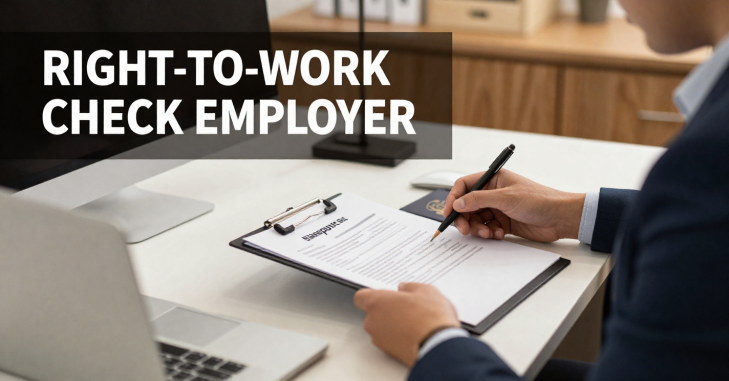
The purpose of a right-to-work check employer is to verify that a job applicant has legal permission to work. This check must be completed before employment begins and applies to all workers, regardless of nationality.
It involves reviewing official documents or using an online system to confirm the individual’s work eligibility. Conducting this check properly provides employers with a “statutory excuse,” which protects them from penalties if the employee is later found to be working illegally.
Why Are Right-to-Work Checks Important for Employers?
Right-to-work checks are essential for maintaining compliance with employment and immigration laws. They protect businesses from legal risks and ensure fair hiring practices. Employers who fail to carry out these checks may face significant fines, legal action, or even criminal charges.
Additionally, proper checks help maintain workplace integrity and prevent exploitation of illegal workers. By following the correct procedures, employers contribute to a lawful and ethical work environment.
Legal Requirements for Employers

- Legal Obligation for Employers: Employers must confirm that every employee has the right to work before employment begins. This is a mandatory step that ensures compliance with immigration and employment laws.
- Verification Methods: This includes checking original documents or using an official online verification system. Employers must follow approved procedures to ensure the accuracy and authenticity of the information provided.
- Document Validation Requirements: Employers must ensure that documents are valid, belong to the individual, and have not expired. Careful inspection is necessary to prevent fraud and ensure compliance.
- Record Keeping Responsibilities: Employers are also required to keep copies of the documents and record the date of the check. Proper documentation serves as proof that the check was conducted correctly.
- Follow-Up Checks for Temporary Workers: In some cases, follow-up checks are necessary if the employee has temporary permission to work. These checks help confirm that the individual continues to have legal authorization.
- Consequences of Non-Compliance: Non-compliance can result in substantial civil penalties, and repeated violations may lead to criminal liability.
Who Needs a Right-to-Work Check?
Every individual hired must undergo a right-to-work check. This includes full-time employees, part-time workers, temporary staff, and even interns. Employers must apply the same process to all candidates to avoid discrimination claims.
It is important not to make assumptions based on nationality, appearance, or accent. A consistent and fair approach ensures compliance with both immigration and equality laws.
When Should Employers Conduct the Check?
The right to work check must be completed before the individual starts working. Conducting the check after employment has begun is not legally acceptable and may result in penalties. Employers should include this step in their hiring process to ensure compliance.
For employees with time-limited work permissions, follow-up checks must be carried out before the permission expires to confirm continued eligibility.
Documents Required for Right to Work Verification

Employers must review official documents to verify a person’s right to work.
- These documents are typically divided into two categories: List A and List B.
- List A includes documents that show a permanent right to work, such as a passport or national identity document.
- List B includes documents that show temporary permission to work, such as visas or residence permits.
- Employers must carefully check these documents to ensure they are genuine, unaltered, and belong to the individual presenting them.
How to Conduct a Right-to-Work Check?
The process of carrying out a right-to-work check involves three main steps. First, obtain the original documents or access the online verification system. Second, check the documents in the individual’s presence to verify authenticity.
Third, make copies of the documents and record the check date. Employers must ensure that the documents are valid and that the individual matches the photograph and personal details provided. This process helps establish a legal defense against potential penalties.
Manual Right to Work Checks
Manual checks involve physically examining original documents provided by the employee. Employers must carefully inspect the documents to confirm their authenticity and validity. This includes checking for signs of tampering, verifying expiration dates, and ensuring that the documents belong to the individual.
Once verified, employers must make clear copies and securely store them. Manual checks are commonly used when online verification is not available.
Online Right to Work Checks

Manual vs Online Right to Work Checks
Both manual and online checks serve the same purpose but differ in their methods. Manual checks require physical documents and careful inspection, while online checks rely on digital systems for verification. Online checks are generally faster and more secure, but not everyone is eligible for this method.
Employers must determine which method is appropriate based on the employee’s status. In some cases, a combination of both methods may be necessary.
Follow-Up Checks: When and Why They Are Needed
Follow-up checks are required for employees who have temporary permission to work. These checks must be conducted before the employee’s current permission expires. The purpose is to ensure that the individual continues to have legal authorization to work. Failure to conduct follow-up checks can result in penalties, even if the initial check was conducted correctly.
Penalties for Non-Compliance
Employers who fail to conduct proper Right to Work checks may face severe consequences. Civil penalties can include significant fines per illegal worker. In more serious cases, employers may face criminal charges, business closure, or disqualification from operating. Non-compliance can also damage a company’s reputation and lead to loss of trust among clients and stakeholders.
Common Mistakes Employers Should Avoid

- Employers often make mistakes, such as failing to check documents before employment begins, accepting expired documents, or failing to keep proper records.
- Another common mistake is inconsistent checking procedures, which can lead to discrimination claims.
- Employers must ensure that all checks are conducted thoroughly and consistently for every employee.
Conclusion
In conclusion, the right-to-work check employer process is an essential component of responsible and lawful employment practices. Employers who implement this process correctly can significantly reduce the risk of legal penalties, financial losses, and reputational damage.
By ensuring that all employees have valid authorization to work, businesses not only comply with immigration laws but also contribute to a fair and ethical labor market. The importance of consistency cannot be overstated every candidate must undergo the same verification process to prevent discrimination and uphold equality standards.
Whether through manual document checks or modern online verification systems, accuracy and proper record-keeping remain the foundation of a successful right-to-work check employer strategy. Additionally, conducting follow-up checks for individuals with temporary work permission ensures ongoing compliance and demonstrates an employer’s commitment to legal obligations.
If you want to read an interesting article about it, explore our Business category.
FAQs
A UK right-to-work check is a mandatory screening process that employers must perform to verify a job applicant’s legal eligibility to work in the UK. It is designed to prevent illegal working and ensure compliance with UK immigration laws.
Some visas permit work but limit the type of work and the number of hours permitted. Employers are obliged to “take reasonable steps” at “reasonable times” to verify the visa status of a potential employee to comply with the Employer Sanctions Act. Pre-employment screening is not sufficient.
To check a work permit online, visit your local government’s official immigration or labor portal. You typically need your application ID, passport number, or national ID.
An employer runs an employment background check to verify the information in a candidate’s CV, such as their previous employers, education, professional qualifications, certifications, and skills. In some cases, criminal record checks and credit checks can also be part of the employment background check.